

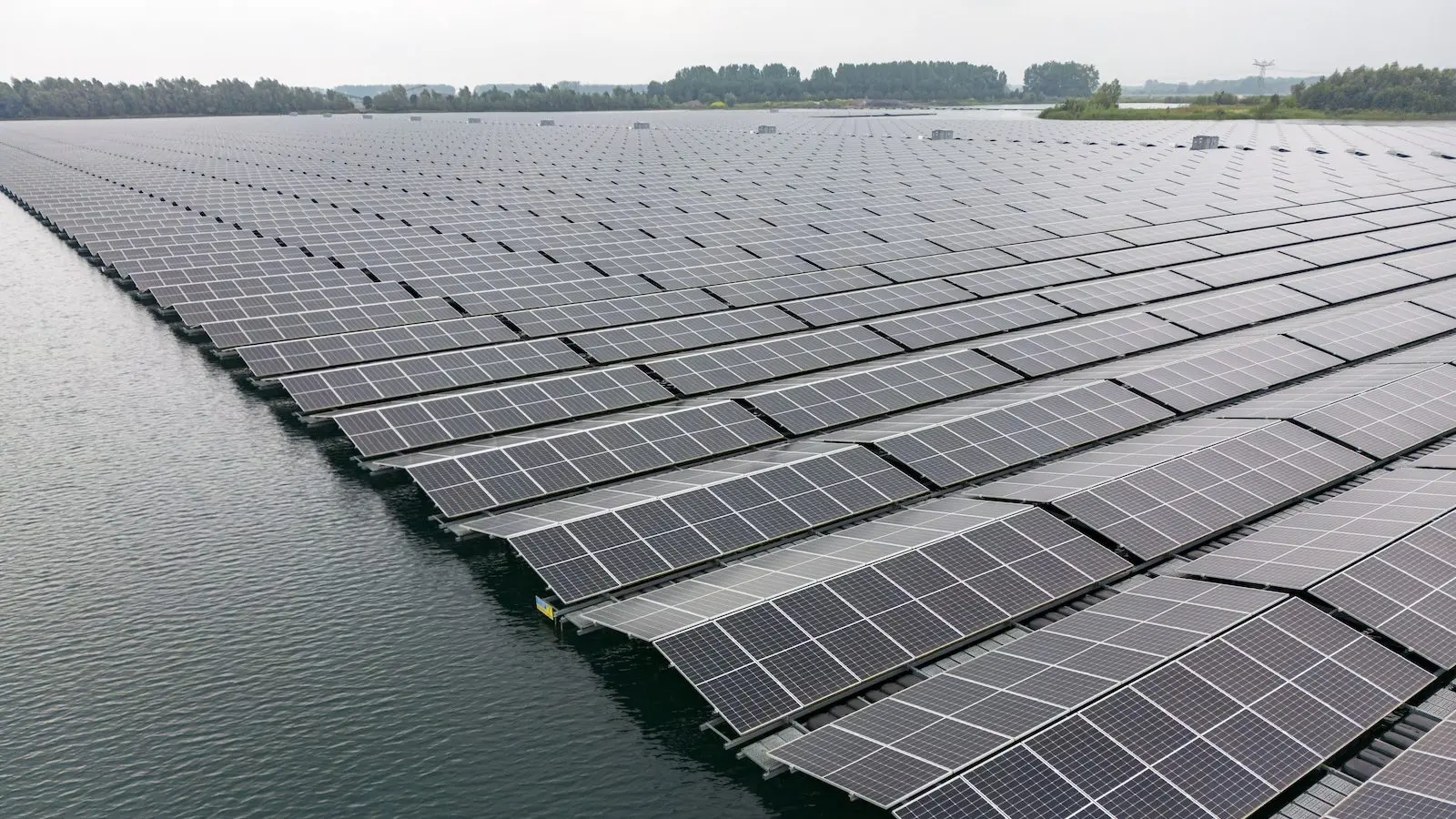
Nigeria has long faced challenges in its power sector: unreliable grid supply, heavy reliance on diesel and petrol generators, high costs, and insufficient energy access, particularly in rural or water-surrounded areas. A new wave of innovation – floating solar photovoltaic (PV) systems – is emerging as one of the most promising paths to help bridge the gap. In this article, we look at the role of floating solar, relevant projects, the barriers, and how this technology is helping speed up solar adoption across Nigeria.
What Is Floating Solar, and Why It Matters
Floating solar refers to solar PV panels mounted on buoyant platforms and installed on water bodies — lakes, reservoirs, ponds, or even coastal calm water. The advantages include:
- Land savings: Land is scarce and often expensive, especially in densely populated or rapidly urbanizing states. By using water surfaces, floating solar helps avoid competition for land, displacements or converting farmland.
- Cooling effect: Water can help cool solar panels, which tends to increase efficiency (panels perform better when not extremely hot).
- Reduced water evaporation: Floating panels provide shade, which helps reduce water evaporation in reservoirs (important in dry seasons).
- Proximity to grid & demand centres: Water bodies are often near established infrastructure or locations of high demand, which helps reduce transmission losses or costs.
Key Floating Solar Projects & Initiatives in Nigeria
Several recent moves illustrate how serious floating solar is being taken in Nigeria.
- The Rural Electrification Agency (REA) has partnered with the Lagos State Government to build an 8 MW floating solar PV plant to power Lagos State University (LASU), Ojo.
- This project was part of a broader MoU signed during the Lagos State Energy Summit that includes rooftop solar for public institutions and aligns with national programs like the State-by-State Initiative and the Distributed Access through Renewable Energy Scale-up (DARES).
- Some renewable energy companies are already including floating solar farms in their portfolios or future plans.
- Companies like The Floating Solar Company are also developing floating solar platforms, especially targeting riverine or water-rich/rural communities where access to reliable power is low.
How Floating Solar Is Fostering Speedy Adoption
Here are several ways in which floating solar is helping accelerate solar usage in Nigeria:
- Reducing Barriers of Land Acquisition
One major hurdle for large solar farms is getting land: cost, ownership, legal title, environmental impact, and competing land uses. Floating solar sidesteps many of these issues by using water infrastructures or bodies. This makes siting easier and quicker, especially in urban coastal or riverine states. - Addressing Public Institution Demand
Public universities, schools, hospitals, and government facilities often suffer from unreliable power, running diesel generators at high cost. The LASU floating solar project is a case in point: guaranteed supply of cleaner, more reliable electricity for services that matter. This both provides immediate relief and showcases solar as a feasible alternative. - Stimulating Private / Hybrid Investment
These projects often bring in partnerships between government, private developers, and international finance or technical partners. Such collaboration brings in capital, expertise, and models for risk mitigation. The MoU between REA and Lagos State is an example. - Scaling Distributed and Decentralized Energy Access
Floating solar complements rooftop solar, mini-grids, and other distributed energy solutions. In contexts where extending transmission lines is hard or expensive (rural, riverine, islands), floating solar (on existing water bodies near demand centres) can act like a distributed plant. This helps reach underserved populations more quickly. - Supporting Innovation, Local Capacity, and Job Creation
Deploying floating solar at scale will require local skills: in design, installation, maintenance, floats manufacturing or procurement, mounting, etc. Also, nearby communities benefit from construction jobs, operations, and new supply-chains. As more projects are announced, capacity building becomes more imperative. - Environmental and Cost Benefits
Over time, floating solar helps reduce dependence on fossil fuels (diesel, petrol), reducing operating costs, pollution, and greenhouse gas emissions. The cooling effect of water may improve panel efficiency and extend their lifespan. These savings help improve the economic viability of solar projects.
Challenges & What Needs To Be Addressed
Speeding up adoption via floating solar doesn’t come without hurdles:
- Initial capital cost & financing: Floating solar tends to have higher upfront cost than ground-mounted for similar capacity (due to floats, anchoring, specialized mounting). Accessing affordable finance is critical.
- Technical and maintenance challenges: Water introduces risks: corrosion, biofouling, moving water, fluctuations in water level, impacts on aquatic ecosystems, anchoring stability. Ensuring durability and good design is essential.
- Regulatory & Permitting Complexity: Water rights, environmental impact / ecological assessments, permits for use of public water bodies, integration into grid, power purchase agreements (PPAs). Delays in approvals can slow projects.
- Grid integration / Transmission: Even if generation is reliable, lack of efficient transmission and distribution infrastructure, or weak grid at local levels, can hamper actual delivery to end users.
- Awareness & Social Acceptance: Public understanding of floating solar is less mature. Some communities may have concerns about impacts on fishing, water access, or environment. Also, solar systems sold previously with low quality give a bad name. Overcoming skepticism matters.
What Policy, Market & Stakeholder Actions Would Help Further Accelerate Adoption
To unlock the full potential of floating solar (and other solar technologies), some enabling conditions are needed:
- Clear, supportive regulatory framework: Policies that facilitate permitting, ensure environmental protections without overburdening projects, and provide clarity on PPAs, tariffs, grid interconnection.
- Financial incentives & risk mitigation tools: Subsidies, grants, concessional loans, guarantee mechanisms, tax incentives (import duty, VAT waivers) for solar equipment, especially for floating solar components.
- Promoting local manufacturing & supply chains: Encouraging domestic production (floats, panels, inverters, mounting systems) lowers costs over time, creates jobs, and reduces dependence on imports and exchange-rate risk.
- Capacity building & technical training: University programs, technical/vocational training, R&D centers to build know-how around floating solar design, installation, maintenance.
- Public-private partnerships: Leveraging government commitment with private sector innovation and international technical and financial partners. The REA-Lagos MoU is one such model.
- Pilot projects & demonstration sites: Early projects such as the LASU floating solar plant serve as proof of concept, generating data, raising trust, and showing what works (and what doesn’t).
What the Outlook Looks Like
With recent announcements, Nigeria is entering a phase where floating solar starts to move from “novel idea” to “active deployment.” The LASU project (~8 MW) is notable, but Nigeria has the solar resource, the water bodies, the demand, and increasing policy momentum to support much larger scale deployment.
If the challenges are managed, floating solar could significantly:
- Increase solar capacity faster than would be possible relying on land alone
- Reduce energy access gaps, especially for public institutions and underserved areas
- Lower the environmental footprint of power generation
- Push forward local industry and employment in renewable energy
Floating solar represents a powerful tool in Nigeria’s energy transition toolbox. It addresses key constraints of land, cost, and accessibility, offering a pathway to grow solar adoption more rapidly. As more projects move from planning to execution, and if policy, finance, regulation, and local capacity align, floating solar could play a central role in delivering reliable, clean, and affordable electricity for Nigerians.
Comments are closed