

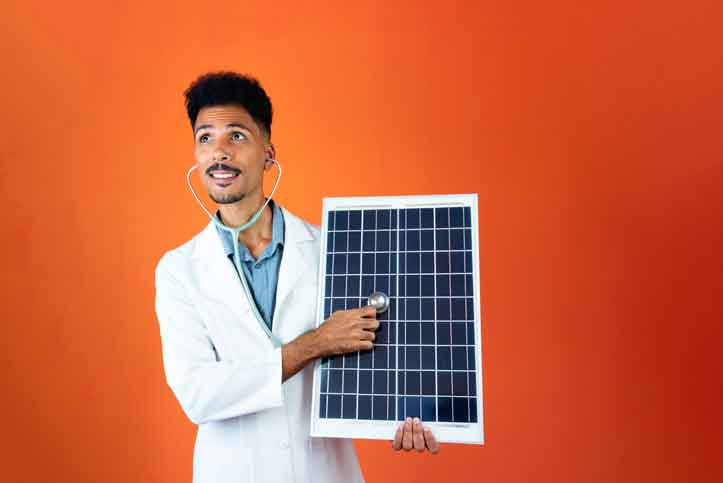
Access to reliable electricity is one of the biggest challenges facing Nigeria’s healthcare system. From rural clinics to urban hospitals, frequent blackouts, unreliable grid supply, and the high cost of diesel generators undermine service delivery. For a country battling high maternal mortality rates, recurring disease outbreaks, and limited rural health access, energy poverty in healthcare is not just an infrastructure issue – it is a life-or-death problem.
Solar energy offers a sustainable, scalable solution. By providing clean, reliable, and affordable power, solar technology can transform the quality of healthcare across Nigeria.
1. Powering Rural Clinics
More than 50% of primary health centers in Nigeria lack reliable electricity. Many operate with kerosene lamps or torches at night, severely limiting emergency care.
- How solar helps:
- Solar mini-grids and stand-alone systems can power rural clinics where grid extension is impractical.
- Consistent lighting allows doctors and nurses to perform nighttime deliveries and emergency procedures safely.
- Patients in underserved areas gain access to reliable, round-the-clock healthcare.
2. Refrigeration for Vaccines and Medicines
Cold chain reliability is essential for vaccines, blood storage, and temperature-sensitive drugs. Power outages often lead to spoilage, wasting scarce medical resources.
- How solar helps:
- Solar-powered refrigerators ensure vaccines remain potent even in remote areas.
- Strengthens immunization programs, especially for diseases like polio, measles, and COVID-19.
- Reduces wastage and improves the efficiency of drug distribution systems.
3. Supporting Medical Equipment
Essential devices like oxygen concentrators, ultrasound machines, and incubators require steady power supply. Inconsistent electricity limits their usage and reduces patient survival rates.
- How solar helps:
- Provides stable power for life-saving equipment.
- Improves diagnostic capacity, reducing misdiagnosis and delays.
- Enables hospitals to adopt telemedicine and digital health systems.
4. Reducing Dependence on Diesel Generators
Many Nigerian hospitals spend a significant portion of their budgets on diesel for backup generators. This increases healthcare costs and contributes to air pollution.
- How solar helps:
- Cuts operational costs, allowing hospitals to redirect funds toward medical staff, equipment, and patient care.
- Provides a cleaner alternative that reduces air and noise pollution.
- Encourages energy independence, particularly for mission hospitals and rural health facilities.
5. Improving Maternal and Child Health
Nigeria has one of the world’s highest maternal and infant mortality rates, partly due to power failures during childbirth and neonatal care.
- How solar helps:
- Reliable lighting and powered equipment improve safety during labor and delivery.
- Ensures incubators and neonatal units remain functional.
- Boosts the confidence of healthcare workers and patients alike.
6. Attracting and Retaining Medical Staff
Doctors and nurses are less likely to work in facilities where power is unreliable.
- How solar helps:
- Improves working conditions, making rural postings more attractive.
- Allows staff to use digital tools for training, communication, and research.
- Reduces burnout by ensuring medical teams can focus on patients, not power shortages.
7. Strengthening Emergency Response and Data Systems
Modern healthcare depends on communication networks, data storage, and emergency response coordination.
- How solar helps:
- Keeps communication systems and mobile devices powered for emergency calls.
- Supports electronic health records and digital patient management.
- Facilitates better disease surveillance and reporting in rural areas.
For Nigeria, the adoption of solar energy in healthcare is more than a sustainability initiative — it is a public health imperative. By powering clinics, preserving vaccines, supporting critical equipment, and reducing costs, solar energy can significantly improve healthcare outcomes.
Investments in solar solutions for hospitals and rural clinics would save lives, strengthen the healthcare workforce, and contribute to long-term economic growth. A brighter, healthier Nigeria is possible — and solar power can light the way.
Comments are closed